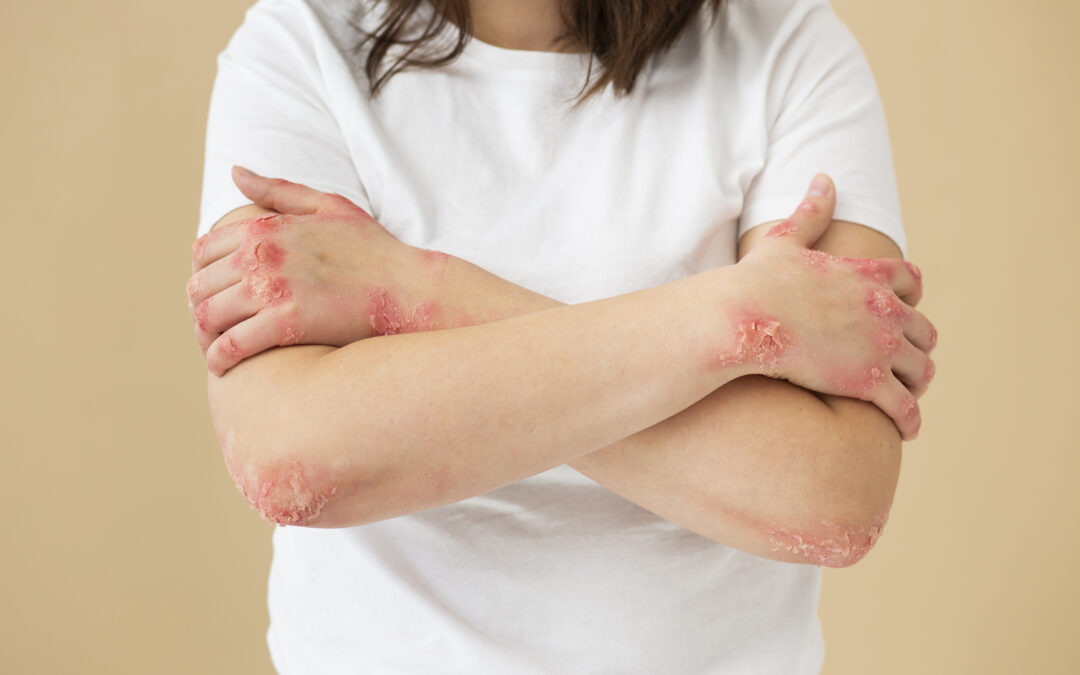
The main forms of psoriasis include plaque, guttate, pustular, inverse, and erythrodermic psoriasis.
Plaque psoriasis
is the most common type of psoriasis. Your skin will have raised, inflamed (red) lesions. These lesions will be covered with silvery white scales made up of dead skin cells. Doctors call this condition psoriasis vulgaris (vulgaris means common). Your knees, elbows, scalp, and trunk are the places to look for this. At first, the plaque psoriasis lesions look like red dot-like spots and may be very small. These dots slowly grow bigger and become scaly. Scales will come off easily and fall off constantly. If you remove the scales, you will see tiny bleeding points below. This is known as the Auspitz sign. You may have plaques that cover large areas of skin and merge into each other. You also may have lesions in the same place on the right and left sides of your body. You may have psoriasis anywhere on your body, but plaque lesions appear most often on the scalp, knees, and elbows. These lesions are different in everyone. If you have had psoriasis for a long time, your fingernails and toenails will be affected. The nails will be pitted, scaly, ridged, and / or furrowed. You may become upset, depressed, and embarrassed by the effects of psoriasis on your appearance.
Guttate Psoriasis
When you have guttate psoriasis, you will have small red dots (or drops) on your trunk, arms, and legs. You may have some scales on these lesions. This form can flare suddenly following a streptococcal infection or viral upper respiratory infection. Other events can also lead to an attack of guttate psoriasis, including illness, particularly tonsillitis, a cold, or chickenpox; immunizations; physical trauma; psychological stress; and the administration of anti-malarial drugs.
Pustular Psoriasis
Pustular psoriasis causes pus-filled blisters to form on your skin. These blisters are called pustules. The pus is filled with white blood cells; however, this condition is not an infection, and it is not contagious. It might just affect your hands and feet, or it can occur all over your body. Pustular psoriasis tends to cause cycles of erythema (reddening of the skin), pustule formation, and scaling of the skin.
Inverse Psoriasis
You will find inverse psoriasis mainly in your armpit, on your groin area, under your breast, and in other skin folds. It will generally appear as smooth inflamed lesions without scaling. It will become easily irritated by rubbing and sweating.
Erythrodermic Psoriasis
Erythrodermic psoriasis is the reddening of the skin all over your body. Fine scales will fall off. You will also itch severely, and the red areas will hurt. These areas may swell. This form of psoriasis disrupts your body’s chemistry and causes substantial fluid, protein, and electrolyte loss. This can lead to severe illness. You can develop edema (swelling from fluid retention) and infection. Your body’s temperature regulation can be disrupted. This can also cause an irregular heartbeat or heart attack in people with pre-existing cardiovascular problems. Erythrodermic psoriasis can result in infection, pneumonia, congestive heart failure, and death.